🚚 Free Worldwide Shipping on All Orders!Shop Now


Future Travel
OUVIR / LISTEN:
CLIP1 - CLIP2 - CLIP3 - CLIP4 - CLIP5
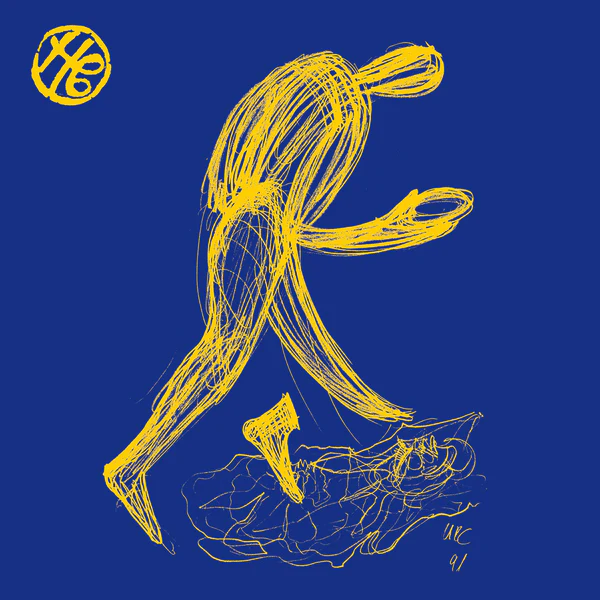
"Black Truffle is thrilled to present the first vinyl reissue of David Rosenboom’s unique Future Travel, originally released on the short-lived Detroit label Street Records in 1981 and here presented in an expanded edition with an additional LP of wild, previously unheard live and studio material from the same period. Future Travel emerged from the confluence of two important streams in Rosenboom’s work at this time. First, his exploration of ‘propositional music’, defined as ‘complete cognitive models of music’ that start from the radical question, ‘What is music?’ In this case, the music belongs to the universe of Rosenboom’s In the Beginning (1978-1981), in which proportional relationships determine the material available to the composer in all musical parameters (harmonic relationships, melodic shapes, rhythmic subdivisions, dynamics, and so on). Second, the work documents a key moment in Rosenboom’s long collaboration with synthesizer pioneer Don Buchla. Having played a role in developing concepts for some of the modules of the Buchla 300 Series Electric Music Box (an innovative analogue modular system controlled by micro-processors), Rosenboom went on to write the software for Buchla’s hybrid analogue-digital keyboard synthesiser, the Touché, the instrument heard most prominently here. In a way that no purely analogue synthesizer could, the 300 Series and Touché allowed Rosenboom to work with the In the Beginning algorithms in real time, the synthesizers becoming ‘intelligent instruments’ that actively collaborate with the performer. Developing the open structures of the electronic pieces from In the Beginning, Future Travel explored the possibilities of simply ‘playing the system’, recording live at Francis Ford Coppola’s Zoetrope studio in San Francisco. Working from loose sketches, Rosenboom added acoustic instruments to the electronic sounds and, on some pieces, the processed voice of Jacqueline Humbert. Like Rosenboom’s collaboration with Humbert on the abstracted synth-chanson of Daytime Viewing, this music set out deliberately to challenge the ‘stratified and illusorily coagulated identities in the musical culture of the time,’ refusing distinctions between ‘serious’ and popular music. But where Daytime Viewing achieves this in part through genre references, Future Travel is bracingly sui generis, existing in a unique universe where radical formalisation à la Xenakis spontaneously gives rise to expressive jazz harmonies and old-timey folk melodies. The crystalline quality of many of the Touché sounds gives Future Travel a sparkling, immediately enticing surface, its layers of shifting ostinato patterns pulsating outside conventional meter, rippling like waves on the surface of water. On opener ‘Station Oaxaca’, ping-ponging synth arpeggios and hand percussion accompany a sentimental violin melody, abruptly overtaken by layered keyboard runs, before the entry of tinkling marimba-like sounds reframe the scene as sci-fi Martin Denny exotica. ‘Time Arroyo’ begins as an austere study in staccato synth sounds in multiple overlapping tempi, reminiscent of Ligeti’s famous ‘clock’ rhythmic effects. Before long, it opens up into a melodic passage with the gentle heroism of classic Roedelius, which proves to be only a brief interlude before the layers of rhythmically distinct synthesiser patterns begin to build and accelerate into an increasingly dense cacophony. The wildest twists and turns are saved for the epic closer ‘Nova Wind’, where the arrangement focuses on Rosenboom’s virtuoso piano playing, perfectly embodying the project’s radical disregard of stylistic orthodoxies as he moves from hyperactive pointillistic flurries to a kind of space-age gospel. At several points throughout the record, the distinctive voice of Jacqueline Humbert is heard reading passages from the text component of In the Beginning, a dialogue between The Double (an embodiment of humanity’s timeless desire to replicate itself in spiritual and technological copies) and two Spirit Characters. Fittingly, as all are conceived as embodiments of a future form of techno-human collective consciousness, distinctions between the three characters are not immediately evident in Humbert’s delivery, just as the music blurs the boundaries between intelligent computing and human spontaneity. Adorned with a striking retro-futurist cover (and here accompanied by extensive new liner notes and archival images), Future Travel is a time capsule of radical imaginings at the birth of our digital age, reminding us of utopian possibilities of which our own present seems so often to fall short." (Label PR)
$15.22
Original: $43.50
-65%Future Travel—
$43.50
$15.22Future Travel
OUVIR / LISTEN:
CLIP1 - CLIP2 - CLIP3 - CLIP4 - CLIP5
"Black Truffle is thrilled to present the first vinyl reissue of David Rosenboom’s unique Future Travel, originally released on the short-lived Detroit label Street Records in 1981 and here presented in an expanded edition with an additional LP of wild, previously unheard live and studio material from the same period. Future Travel emerged from the confluence of two important streams in Rosenboom’s work at this time. First, his exploration of ‘propositional music’, defined as ‘complete cognitive models of music’ that start from the radical question, ‘What is music?’ In this case, the music belongs to the universe of Rosenboom’s In the Beginning (1978-1981), in which proportional relationships determine the material available to the composer in all musical parameters (harmonic relationships, melodic shapes, rhythmic subdivisions, dynamics, and so on). Second, the work documents a key moment in Rosenboom’s long collaboration with synthesizer pioneer Don Buchla. Having played a role in developing concepts for some of the modules of the Buchla 300 Series Electric Music Box (an innovative analogue modular system controlled by micro-processors), Rosenboom went on to write the software for Buchla’s hybrid analogue-digital keyboard synthesiser, the Touché, the instrument heard most prominently here. In a way that no purely analogue synthesizer could, the 300 Series and Touché allowed Rosenboom to work with the In the Beginning algorithms in real time, the synthesizers becoming ‘intelligent instruments’ that actively collaborate with the performer. Developing the open structures of the electronic pieces from In the Beginning, Future Travel explored the possibilities of simply ‘playing the system’, recording live at Francis Ford Coppola’s Zoetrope studio in San Francisco. Working from loose sketches, Rosenboom added acoustic instruments to the electronic sounds and, on some pieces, the processed voice of Jacqueline Humbert. Like Rosenboom’s collaboration with Humbert on the abstracted synth-chanson of Daytime Viewing, this music set out deliberately to challenge the ‘stratified and illusorily coagulated identities in the musical culture of the time,’ refusing distinctions between ‘serious’ and popular music. But where Daytime Viewing achieves this in part through genre references, Future Travel is bracingly sui generis, existing in a unique universe where radical formalisation à la Xenakis spontaneously gives rise to expressive jazz harmonies and old-timey folk melodies. The crystalline quality of many of the Touché sounds gives Future Travel a sparkling, immediately enticing surface, its layers of shifting ostinato patterns pulsating outside conventional meter, rippling like waves on the surface of water. On opener ‘Station Oaxaca’, ping-ponging synth arpeggios and hand percussion accompany a sentimental violin melody, abruptly overtaken by layered keyboard runs, before the entry of tinkling marimba-like sounds reframe the scene as sci-fi Martin Denny exotica. ‘Time Arroyo’ begins as an austere study in staccato synth sounds in multiple overlapping tempi, reminiscent of Ligeti’s famous ‘clock’ rhythmic effects. Before long, it opens up into a melodic passage with the gentle heroism of classic Roedelius, which proves to be only a brief interlude before the layers of rhythmically distinct synthesiser patterns begin to build and accelerate into an increasingly dense cacophony. The wildest twists and turns are saved for the epic closer ‘Nova Wind’, where the arrangement focuses on Rosenboom’s virtuoso piano playing, perfectly embodying the project’s radical disregard of stylistic orthodoxies as he moves from hyperactive pointillistic flurries to a kind of space-age gospel. At several points throughout the record, the distinctive voice of Jacqueline Humbert is heard reading passages from the text component of In the Beginning, a dialogue between The Double (an embodiment of humanity’s timeless desire to replicate itself in spiritual and technological copies) and two Spirit Characters. Fittingly, as all are conceived as embodiments of a future form of techno-human collective consciousness, distinctions between the three characters are not immediately evident in Humbert’s delivery, just as the music blurs the boundaries between intelligent computing and human spontaneity. Adorned with a striking retro-futurist cover (and here accompanied by extensive new liner notes and archival images), Future Travel is a time capsule of radical imaginings at the birth of our digital age, reminding us of utopian possibilities of which our own present seems so often to fall short." (Label PR)
Product Information
Product Information
Shipping & Returns
Shipping & Returns
Description
OUVIR / LISTEN:
CLIP1 - CLIP2 - CLIP3 - CLIP4 - CLIP5
"Black Truffle is thrilled to present the first vinyl reissue of David Rosenboom’s unique Future Travel, originally released on the short-lived Detroit label Street Records in 1981 and here presented in an expanded edition with an additional LP of wild, previously unheard live and studio material from the same period. Future Travel emerged from the confluence of two important streams in Rosenboom’s work at this time. First, his exploration of ‘propositional music’, defined as ‘complete cognitive models of music’ that start from the radical question, ‘What is music?’ In this case, the music belongs to the universe of Rosenboom’s In the Beginning (1978-1981), in which proportional relationships determine the material available to the composer in all musical parameters (harmonic relationships, melodic shapes, rhythmic subdivisions, dynamics, and so on). Second, the work documents a key moment in Rosenboom’s long collaboration with synthesizer pioneer Don Buchla. Having played a role in developing concepts for some of the modules of the Buchla 300 Series Electric Music Box (an innovative analogue modular system controlled by micro-processors), Rosenboom went on to write the software for Buchla’s hybrid analogue-digital keyboard synthesiser, the Touché, the instrument heard most prominently here. In a way that no purely analogue synthesizer could, the 300 Series and Touché allowed Rosenboom to work with the In the Beginning algorithms in real time, the synthesizers becoming ‘intelligent instruments’ that actively collaborate with the performer. Developing the open structures of the electronic pieces from In the Beginning, Future Travel explored the possibilities of simply ‘playing the system’, recording live at Francis Ford Coppola’s Zoetrope studio in San Francisco. Working from loose sketches, Rosenboom added acoustic instruments to the electronic sounds and, on some pieces, the processed voice of Jacqueline Humbert. Like Rosenboom’s collaboration with Humbert on the abstracted synth-chanson of Daytime Viewing, this music set out deliberately to challenge the ‘stratified and illusorily coagulated identities in the musical culture of the time,’ refusing distinctions between ‘serious’ and popular music. But where Daytime Viewing achieves this in part through genre references, Future Travel is bracingly sui generis, existing in a unique universe where radical formalisation à la Xenakis spontaneously gives rise to expressive jazz harmonies and old-timey folk melodies. The crystalline quality of many of the Touché sounds gives Future Travel a sparkling, immediately enticing surface, its layers of shifting ostinato patterns pulsating outside conventional meter, rippling like waves on the surface of water. On opener ‘Station Oaxaca’, ping-ponging synth arpeggios and hand percussion accompany a sentimental violin melody, abruptly overtaken by layered keyboard runs, before the entry of tinkling marimba-like sounds reframe the scene as sci-fi Martin Denny exotica. ‘Time Arroyo’ begins as an austere study in staccato synth sounds in multiple overlapping tempi, reminiscent of Ligeti’s famous ‘clock’ rhythmic effects. Before long, it opens up into a melodic passage with the gentle heroism of classic Roedelius, which proves to be only a brief interlude before the layers of rhythmically distinct synthesiser patterns begin to build and accelerate into an increasingly dense cacophony. The wildest twists and turns are saved for the epic closer ‘Nova Wind’, where the arrangement focuses on Rosenboom’s virtuoso piano playing, perfectly embodying the project’s radical disregard of stylistic orthodoxies as he moves from hyperactive pointillistic flurries to a kind of space-age gospel. At several points throughout the record, the distinctive voice of Jacqueline Humbert is heard reading passages from the text component of In the Beginning, a dialogue between The Double (an embodiment of humanity’s timeless desire to replicate itself in spiritual and technological copies) and two Spirit Characters. Fittingly, as all are conceived as embodiments of a future form of techno-human collective consciousness, distinctions between the three characters are not immediately evident in Humbert’s delivery, just as the music blurs the boundaries between intelligent computing and human spontaneity. Adorned with a striking retro-futurist cover (and here accompanied by extensive new liner notes and archival images), Future Travel is a time capsule of radical imaginings at the birth of our digital age, reminding us of utopian possibilities of which our own present seems so often to fall short." (Label PR)